Two mechanisms — improved blood flow and suppression of TGF-beta1 — plus six months of in-house observation on sebum, headaches and hair strength.
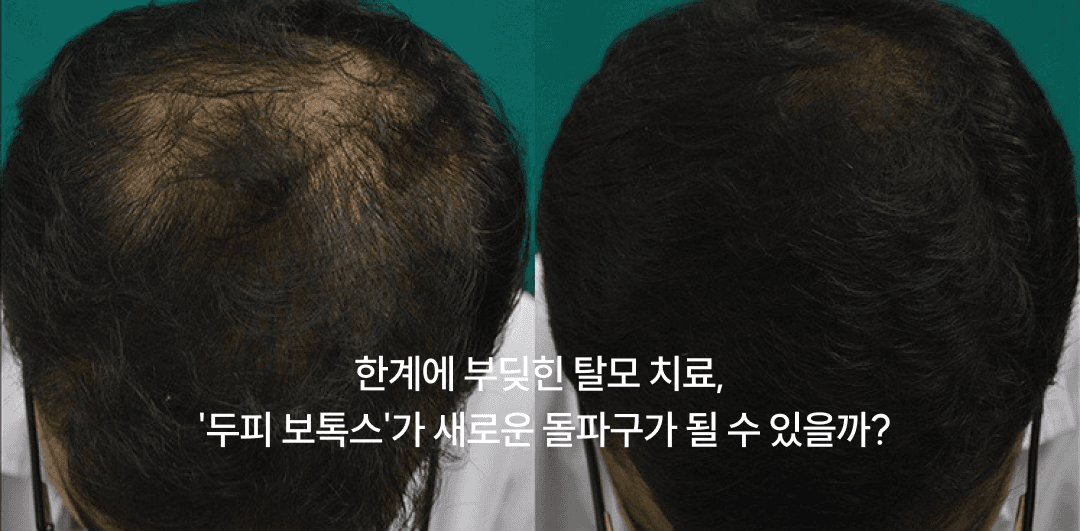
Could scalp botulinum toxin be a new route where hair loss treatment has hit its limits?
Hello. This is Dr. Lee Yumin, medical director of MeSOnBom Clinic in Hongdae.
Hair loss was once thought to belong to men of a certain age, but with stress and environmental factors the proportion of younger and female patients has risen sharply.
At the dermatology and anti-ageing conferences I attend at home and abroad, hair loss is among the hottest topics.
One treatment drawing particular attention is the use of scalp botulinum toxin for hair loss.
Today, drawing on published data and six months of observation within our own clinic, I want to set out honestly and in detail what hope it may offer.
Botulinum toxin usually brings to mind aesthetic purposes such as softening wrinkles or reducing muscle.
So how does it prevent hair falling and support growth? Two main mechanisms have been identified.
Nutrient supply through improved blood flow: botulinum toxin relaxes excessive tension in the thin muscles across the scalp (the frontalis, occipitalis and others). As the muscle relaxes, capillaries in the scalp are released from compression, so blood flow to the follicle increases and the oxygen and nutrients needed for growth are supplied more freely.
Reduction of TGF-beta1: this mechanism is drawing more attention recently. Research indicates that botulinum toxin suppresses secretion of TGF-beta1, a key protein that drives hair loss and impedes growth. This suggests it can block a chemical factor in hair loss directly, not merely improve the environment.
However strong the published data, as a clinician I have to see the change myself before I can recommend something with confidence.
So I performed scalp botulinum toxin over six months on staff in their thirties and forties who had begun to be concerned about hair loss, and on male doctors already taking hair loss medication, building up data.
After sufficient observation, we confirmed the following meaningful changes.
Reduced sebum (observed from one month): excessive sebum on the scalp blocks the pores and causes inflammation, accelerating hair loss. Scalp botulinum toxin suppressed the activity of sweat and sebaceous glands, noticeably reducing oiliness.
Relief of tension headache: an unexpected additional effect was a reduction in headaches, because the scalp muscles relax. Neurologists at home and abroad already use this widely for migraine.
Stronger hair with better retention: thinning and weak shedding eased, and both practitioner and subject could feel strength returning at the root.
On the pain that patients worry about most: because it is injected directly into the scalp, there is some stinging.
But compared with injections in the face, the intensity is far lower. The common assessment was that it is mild enough to tolerate without anaesthesia.
Based on our clinical experience, I recommend scalp botulinum toxin strongly to the following.
Women with female pattern hair loss: women cannot take finasteride-based oral medication as men can, and topical minoxidil alone has clear limits, so treatment options are few. Scalp botulinum toxin is an excellent alternative.
Those needing maintenance after a hair transplant: a transplant does not end hair loss. Existing hair outside the grafted area can continue to thin, so this is very effective aftercare for protecting the remaining resource.
Those needing urgent improvement of the scalp environment: for those whose scalp is always oily with sweat and sebum, or badly damaged by frequent colouring and bleaching, it improves the environment at its foundation.
Hair thinning and shedding weakly: suitable for those whose hair is becoming finer and whose overall volume is collapsing.
Rather than a single session, what matters is a cumulative effect at regular intervals.
Recommended interval: three sessions at four-week intervals as a basic course.
When results appear: given the hair growth cycle, change in the scalp environment (reduced sebum) can be felt from the first month at the earliest, with more fundamental change in hair thickness and reduced shedding at around three months.
Precaution: on the day of treatment, avoid washing your hair to prevent infection and allow the medication to settle; shampoo the following morning.
In my younger years I had so much hair that hair ties would snap, so I did not fully understand the concern.
It was only in my forties, experiencing thinning and shedding myself, that I came to understand how great the stress and the longing are.
Fundamental treatment for hair loss still rests mainly on transplantation and medication.
But for women whose drug options are limited, and for those needing ongoing care after a transplant, scalp botulinum toxin is a genuinely attractive option with sound medical grounding.
Fine dust and smog have worsened recently, threatening the scalp environment further.
Please wash accumulated fine dust from the scalp thoroughly after going out, to keep the follicles healthy.
I hope this has been of some help to everyone troubled by hair loss. Thank you.
Our medical team will advise you based on your skin condition.