How the 532nm Reepot laser with contact cooling treats solar lentigines, what to check before treatment, and how to care for the area afterwards.
Written and reviewed by Dr. Lee Yumin, MeSOnBom Clinic
Hello. This is Dr. Lee Yumin of MeSOnBom Clinic.
Lentigines settled around the eyes, on the cheekbones or at the temples become more noticeable over time, and are among the pigmented lesions people most often consider treating.
A range of pigment lasers is used to treat them, and interest in the Reepot laser has grown recently.
In practice I am often asked, "How does it differ from existing pigment lasers?" and "Can a lentigo be removed in a single session?"
Today I want to look in detail at how the Reepot laser treats lentigines, what to consider before treatment, and the aftercare and precautions.
A lentigo is a benign pigmented lesion observed mainly in areas exposed to ultraviolet light over a long period; medically it is known as a solar lentigo.
It appears as brown or dark brown macules, related to an increase in melanin within the skin.
Even lentigines that look similar on the surface can differ in the size and colour of the lesion and in its borders and shape, and other skin changes such as melasma or erythema can be present around them.
When treating a lentigo, then, it is important to look at the form of the lesion and the condition of the surrounding skin rather than only the visible pigment.
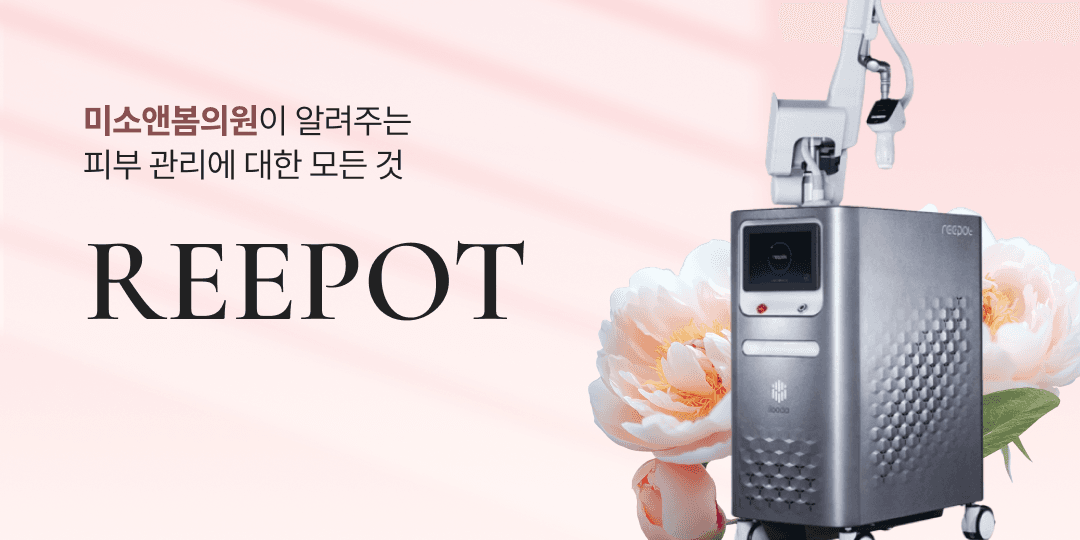
Reepot is a medical device that treats pigmented lesions using a 532nm (Nd:YAG) laser together with a cooling system.
One of its characteristics is VSLS (Vasculature Salvage Laser Surgery) technology, designed to deliver laser energy to the lesion while the temperature of the treated area is lowered.
In this process CPTL (contact cooling) technology holds the set cooling temperature steady during treatment, while AutoDerm technology recognises the lesion with a medical camera and assists laser delivery within that area. [Reference 1]
On this basis the Reepot laser can be considered as one treatment option for pigmented lesions such as solar lentigines, where the border with the surrounding skin is relatively distinct.
It is not, however, applied identically to every lentigo; before treatment we assess the lesion to decide whether it is suitable and over what extent.
Immediately after treatment, skin reactions such as redness or exudate can appear in the treated area.
A moist dressing can be applied for a period to protect the area from external irritation.
How long the dressing is kept on and how it is changed can differ with the size of the lesion and the condition of the skin, so it is best to care for the area following the method the medical team explains.
During recovery the treated area can look pink or red, or temporarily appear darker brown.
It is important during this period to reduce unnecessary irritation to the skin and to observe the following.
Moist dressing care: protect the treated area for the period advised, and do not remove crusts or flaking skin yourself.
Adequate moisturising: moisturise sufficiently so the skin does not become dry.
Sun protection: use sunscreen carefully when going out, and avoid strong ultraviolet exposure.
Avoiding heat: avoid saunas, steam rooms and hot baths during recovery.
Reducing irritation: it is better to use irritating products such as scrubs and peels only once the skin has recovered fully.
Q. Can the Reepot laser remove a lentigo in one session?
A. Depending on the lesion, change can be seen after a single treatment, but it cannot be stated that every lentigo will be removed at once. Further treatment can be needed according to the size and shape of the lentigo, the pattern of pigment and the skin's recovery response.
Q. Can I have the Reepot laser if I have both lentigines and melasma?
A. Where lentigines and melasma are both present, it is important to establish the distribution of both pigments and the condition of the surrounding skin before planning treatment. Melasma around or beneath a lentigo can look relatively more prominent after the lentigo is treated, so its distribution must be assessed as well.
Q. When does the red mark after Reepot laser disappear?
A. It can fade gradually as the skin recovers, but if it persists longer than expected or the colour of the treated area grows steadily darker, it is best to have it assessed by the medical team.
The Reepot laser is one of the methods available for treating lentigines, but it does not apply identically to every pigmented lesion.
What matters more than the characteristics of the device is establishing accurately the type and extent of the present pigmentation and the condition of the surrounding skin, and then deciding on the appropriate method.
If you are considering treatment, please build a plan suited to you through full consultation with a doctor.
[1] CLASSYS. REEPOT official product information — 532nm Nd:YAG, VSLS, CPTL and AutoDerm technology. https://classys.co.kr/product/reepot/
Written by Dr. Lee Yumin — MeSOnBom Clinic
Our medical team will advise you based on your skin condition.