Three clinical patterns of rosacea, why leaving it untreated leads to permanent telangiectasia, and the skincare rules that matter.
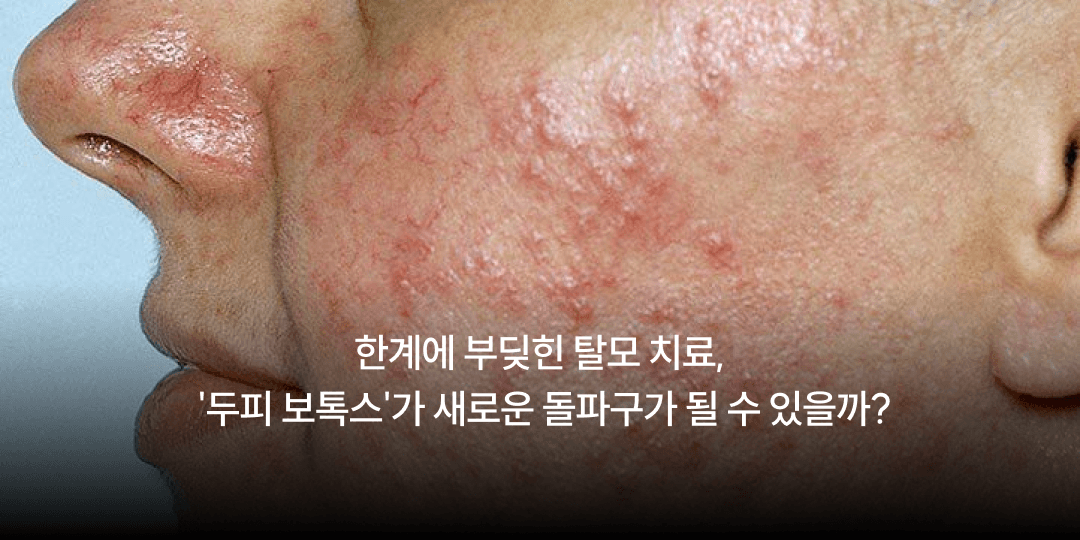
Deepening facial redness — could it be rosacea?
Hello. This is Dr. Lee Yumin, medical director of MeSOnBom Clinic in Hongdae.
Clothes are lighter now and summer is here.
I happen to like hot, humid weather, so I welcome the change of season — but the view from a dermatology clinic is a little different.
As the air begins to dry, many more women in their thirties to fifties come in saying their face is red and burning.
Today I want to look closely at rosacea, the hidden cause behind that redness.
Assessing the skin of patients in their thirties to fifties who come in about redness, a considerable proportion have rosacea.
The Korean name comes from the idea of a face flushed as if from drink, and the English name rosacea likewise carries the sense of being red as a rose.
Unfortunately the precise cause of rosacea is still not fully established in modern medicine.
We have identified only broad associations — that indiscriminate long-term use of steroid creams may be a factor, and that it occurs most frequently in women in their thirties to fifties.
The most characteristic symptom is facial redness that appears at any time.
Beyond redness, the skin stings, itches and becomes extremely dry. It worsens and settles repeatedly, particularly in spring and autumn, so the stress patients experience is considerable.
Based on the patients we see, rosacea can be broadly divided into three patterns.
With pronounced papules: not a common case among our patients, but clear redness appears across the central face and forehead with numerous pustules at its centre.
Confused with acne (telangiectatic): at a glance it resembles small closed comedones, but looked at closely, fine red capillaries have developed abnormally across the whole face. Many patients in their thirties come believing it is simple acne and are diagnosed with rosacea accompanied by itching and stinging.
Simple redness (sensitive, without papules): the type we see most often. Without obvious papules, the skin is generally thin and sensitive, with redness lingering constantly across the forehead, nose, both cheeks and the chin. It is also the type whose symptoms show first at the change of season.
Rosacea is closer to a chronic condition that improves and worsens repeatedly, so it should be approached as ongoing management rather than cure.
Because of that, many people delay or stop treatment, saying medication only helps at the time and they would rather avoid it.
But if rosacea is left and the inflammatory response accumulates, the vessels beneath the skin lose their elasticity and dilate permanently — telangiectasia.
At that stage recovery with medication or ointment alone is not possible, and vascular laser treatment, which is more involved and uncomfortable, becomes necessary.
So when symptoms look likely to worsen, I tend to raise the intensity of treatment early and respond actively.
I prescribe oral medication and topical ointment to suppress inflammation, and where needed combine laser treatment such as Cell Acne, which reduces inflammation while minimising irritation.
(As an aside, many patients come while symptoms are severe, treat intensively, and then stop coming as soon as the redness settles a little. It is hard even to keep a complete set of after photographs. Please do come in once more after the skin has healed, so we can check it.)
On social video platforms I often see people with rosacea applying harsh creams to get rid of papules or oiliness, or irritating the skin with fashionable microneedle cosmetics. As a dermatologist it is disheartening every time.
Patients with rosacea need particular care with skincare.
To avoid absolutely: oil-rich products that block the pores, ingredients that dry and sensitise the skin such as retinol, spicule cosmetics that irritate physically, and strongly cleansing foam washes or heavy cleansing oils that leave the skin squeaky.
To keep to: mild, oil-free products focused on soothing and hydration. For cleansing, the key is a weakly acidic cleanser used gently to remove only impurities, without irritation.
Rosacea is a frustrating condition that improves and worsens endlessly.
So the wisest approach is to keep a disciplined daily skincare routine and to come in for medical treatment without delay when it enters a worsening phase.
I hope you protect your skin with consistent moisturising and care. Thank you.
Our medical team will advise you based on your skin condition.