A doctor who struggled with acne himself on the 1450nm Accu laser, combined acne routines and why acne care is a marathon.
Hello. This is Dr. Lee Yumin of MeSOnBom Clinic.
People who have known me a long time know it well.
My teenage years were covered in acne, and the scars and the enormously enlarged pores that came with it troubled me well into adulthood.
When I became a doctor and started working in a clinic, I threw every treatment I could at my own face, determined to settle the matter with my own skin.
These days people I have not seen for a while ask me, "what on earth did you do to your face? It looks so much better."
I always answer with a smile.
"I poured money, time and a great deal of pain into it."
I envy people born with good skin more than anyone, but there it is.
Those of us with oily skin simply have to work twice as hard as everyone else.
Because of that personal insecurity and hard-won experience, I take an almost obsessive interest in devices and medications for acne.
And I understand deeply how heavy a burden acne is for the patients living with it.
So today I want to talk about a device I came to value after testing it on my own face, and about how we should approach acne.
One device I particularly rely on for acne is the Accu laser (Accu Toning).
It uses a diode laser at a wavelength of 1450nm.
The key point of that wavelength is that it targets the sebaceous gland precisely — the root cause of acne.
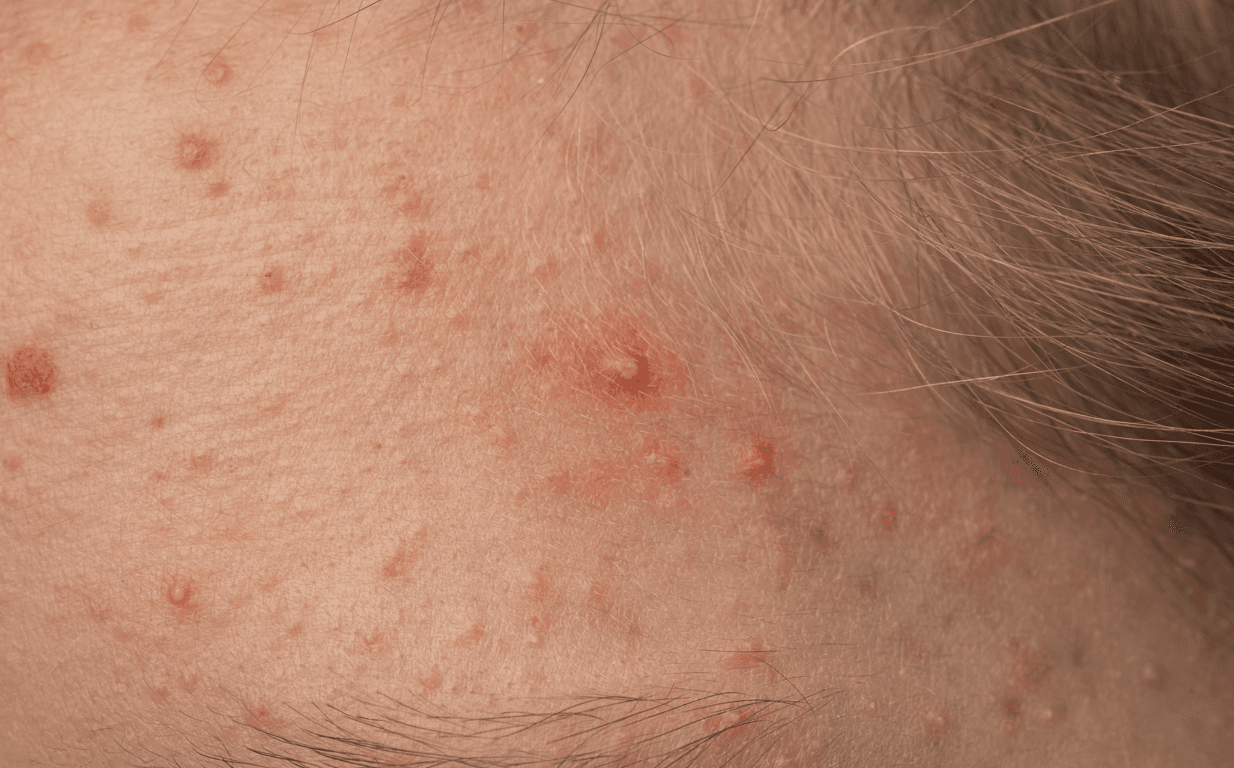
It suppresses sebum production and responds directly to inflammation to calm redness, so it works well on pustular acne and small closed comedones.
This is not merely a subjective impression.
A number of medical studies, including a paper published in 2006 (PubMed), report that treating acne with a 1450nm diode laser produced marked improvement, and that the result held steady for a year.
In practice we combine a single-shot mode aimed at individual lesions with a toning mode that regulates sebum across the whole face.
I should be honest: it is hotter than people expect.
Many patients find tears running down their face during treatment.
But when the redness settles and the acne improves, and the patient smiles and says "it finally looks like a face again", I think those few tears were worth it.
When it comes to acne, my philosophy is that you have to pour in everything available.
Hoping that a single laser will magically clear the skin is closer to wishful thinking.
Quite a few people are reluctant to take acne medication.
I understand the concern about long-term use, but where it is needed, prescribing sebum regulators or antibiotics alongside treatment is what brings inflammation under control quickly.
On top of that, a product containing salicylic acid should be used to peel away built-up dead skin, followed by careful extraction.
The routine I trust and like most in practice is this.
This approach does enough to produce results that satisfy many patients.
One patient who came to us recently before a job interview told us it helped a great deal on the day.
She shed tears every time because the laser was so hot, but she followed the routine faithfully once a week, and when she came in for regenerative care after six to eight sessions with visibly clearer skin, I was as delighted as she was.
As someone who suffered from acne for longer than most, I understand how acne patients feel.
After many treatments and relapses, distrust of clinics builds up, and without a visible result soon, patience runs out.
I was exactly the same.
Many patients fall into what I call the three-six-nine trap.
They come diligently for about three months, then grow frustrated at the slow progress and take three months off.
When the skin flares up again, they come back for another brief three months.
But acne is a long and tedious fight.
It can improve noticeably and then worsen overnight with stress or hormonal change, and the improvement itself can be frustratingly slow.
So acne treatment is a marathon, not a sprint.
It needs a mindset that is both patient and stubborn: I will keep managing this and see it through for as long as it takes.
Please don't give up.
If you invest and care for your skin steadily and in the right way, it does repay you.
I will do my best to keep researching different approaches and devising my own methods to help our patients' acne improve.
I hope my honest experience and the treatment I have described today offer a little hope to those in the same position.
Today I wrote briefly from my own experience.
I will bring you more useful information next time. Thank you.
Our medical team will advise you based on your skin condition.