Why we do not offer sedation for Thermage, why energy level should not be compromised, and how thorough nerve block makes it bearable.
Hello. This is Dr. Lee Yumin of MeSOnBom Clinic.
At the start of a new year, many more people come to us to improve loss of firmness and wrinkles.
Recently many ask for Thermage outright, on a recommendation or something they have heard.
It is an excellent treatment for lifting and tightening, but in consultation there is one fear almost everyone raises.
Pain.
"I really can't stand pain — couldn't you just sedate me?"
I fully understand why patients ask for sedation before a lifting treatment.
But I tell them plainly: we do not offer sedation.
I want to explain the clear reasons I have to decline it as a doctor, and how to have Thermage safely and effectively.
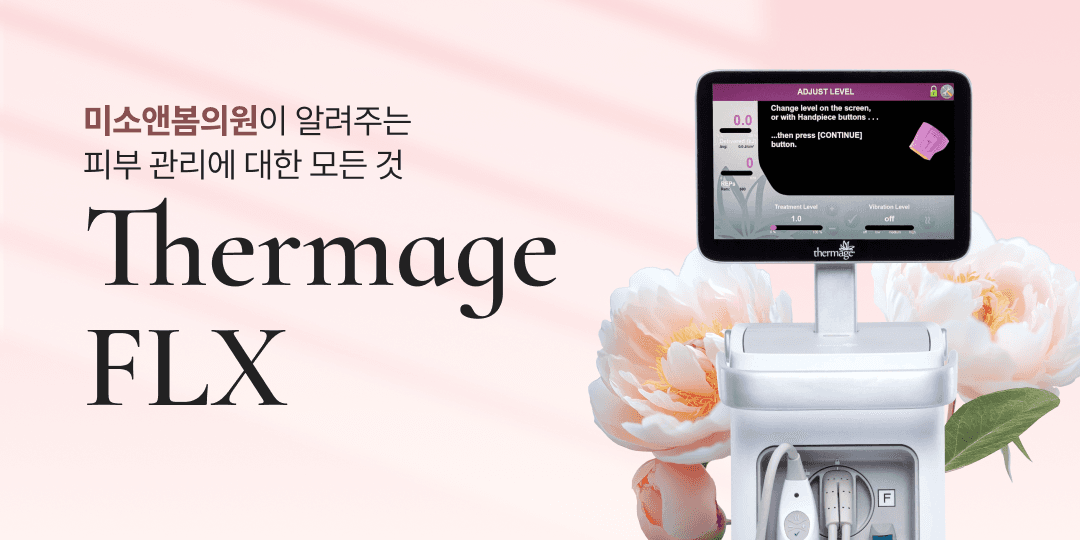
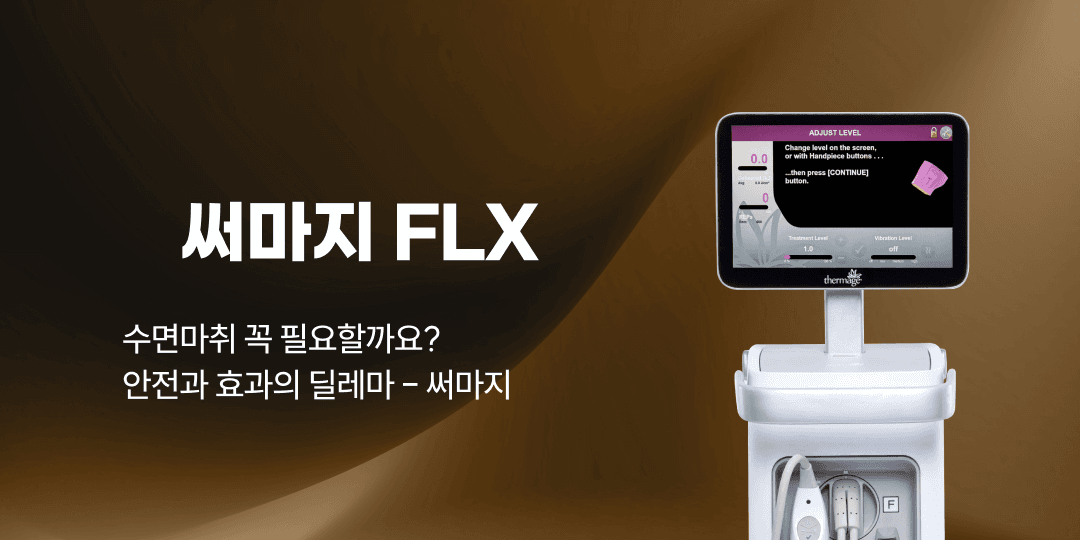
Thermage delivers monopolar RF energy to the dermis to induce collagen regeneration.
RF heat reaching deep into the skin makes it firmer and more elastic.
The difficulty is that a reasonably strong energy is needed for a satisfying result.
Having treated my own face at various energy levels, treatment at level 3.0 brought pain and some swelling, but was overwhelmingly better in both result and duration.
This is an expensive treatment that takes valuable time. If you lower the energy to avoid a moment's pain, you are likely to regret a result that falls short.
That is why I will put more effort into anaesthesia but never compromise on the energy level.
A misconception worth correcting: the hollowing of the cheeks that many worry about has little to do with Thermage. Thermage is designed so that heat reaches only as far as the dermis, not the fat layer. Performed accurately for your skin type, there is no need to worry about losing cheek volume.
You might think sedation would let you forget that momentary pain.
But there is a critical risk.
The risk of prolonged administration: where Ulthera and Thermage are combined, design and treatment together usually take an hour and a half to two hours.
The risk of respiratory failure: propofol is a safe agent, but as the dose grows and the time lengthens, the risk of incidents such as respiratory failure rises steeply.
My philosophy in practice is simple: I do not recommend to patients what I would not have myself.
I would not consider two hours of sedation for a lifting treatment, so how could I recommend sedation at the risk of a patient's life?
Occasionally someone leaves angry that we will not sedate them, but it is a decision that puts the patient's safety first.
Strong Thermage treatment is entirely possible without sedation.
The alternative is local nerve block.
With nerve block performed thoroughly and carefully across the treatment area, drawing on accumulated experience, patients can tolerate high-energy RF treatment perfectly well while awake.
Of the many patients treated at our clinic, not one has stopped a treatment because of pain.
On the contrary, they come back because they remember the firmness it gave them.
In an age of abundant information, it is disheartening to see people frightened by online rumours into demanding excessive anaesthesia, or giving up on treatment altogether.
Thermage is among the most expensive lifting treatments available.
So when choosing a clinic and a doctor, rather than judging by whether sedation is offered or by a low price, please look carefully at whether safety is treated as non-negotiable, and whether there is real understanding of the device and experience in using it.
Today I have written about sedation and Thermage. If you have other questions, please do ask. Thank you.
Our medical team will advise you based on your skin condition.