Why beard shadow and folliculitis recur, how selective photothermolysis works, and why men need more sessions than women.
Hello. This is Dr. Lee Yumin of MeSOnBom Clinic.
Shaving every day gives the skin repeated physical irritation, and in some people can cause temporary weakening of the skin barrier, folliculitis and pigmentation.
In clinic I often meet men who come about recurring folliculitis after shaving, or skin that looks dark because of beard shadow.
Laser hair removal is now used not only to remove hair but as one treatment that can help reduce the skin irritation caused by repeated shaving.
In this column I want to explain the medical causes of these problems in men, and the medical approach based on how the Clarity laser works.
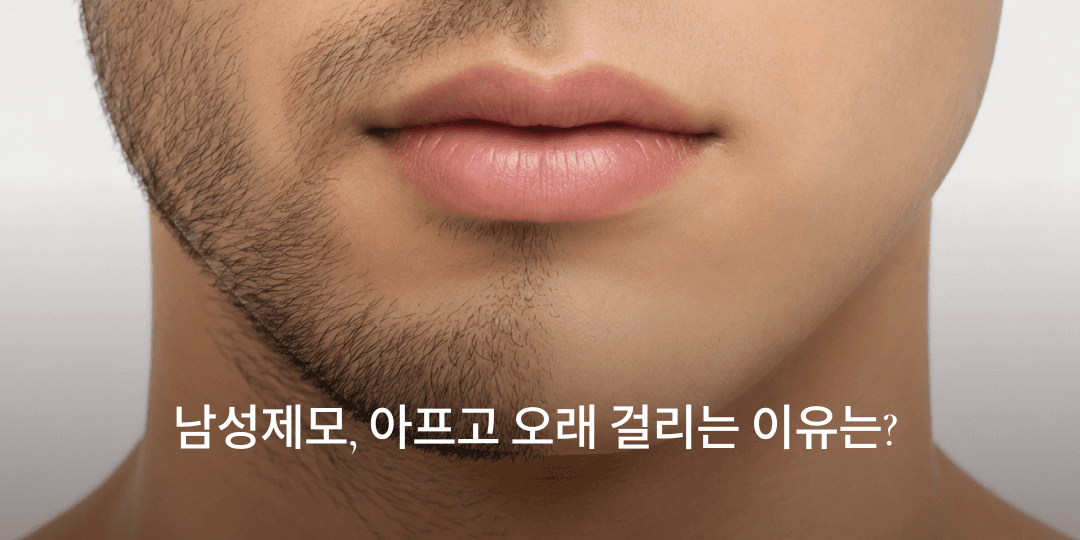
Melanin in the thick hair remaining beneath the skin can show through, and repeated shaving damages the skin barrier, causing irritation or inflammation around the follicle.
Many men believe that pressing the razor closer will remove the dark shadow.
But a man's beard has follicles set deep in the dermis, and thick hair remaining within the skin means melanin shows through structurally, appearing as a bluish or dark shadow.
Using a razor repeatedly to shave closer can also cause fine damage to the stratum corneum, the outermost layer.
That repeated irritation can temporarily weaken the skin barrier, leading to irritation, inflammation around the follicle, folliculitis and post-inflammatory hyperpigmentation (PIH).
For these reasons, laser hair removal can be considered as one medical approach to reducing the skin irritation caused by repeated shaving.
It works on the principle of selective photothermolysis: a laser absorbed selectively by melanin in the hair induces selective thermal damage to the growth tissue of the follicle.
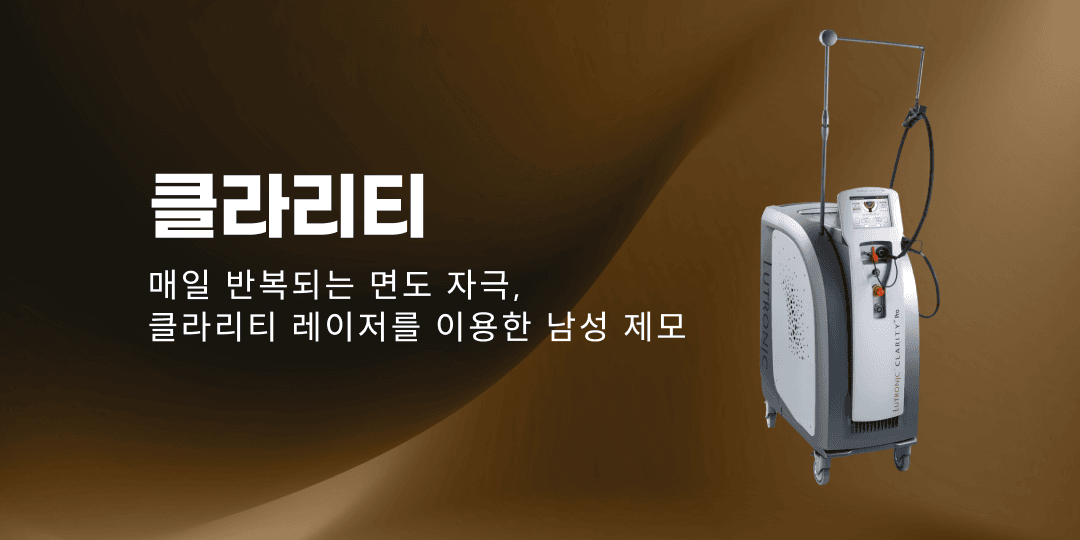
Clarity is a platform device able to use both the 755nm alexandrite wavelength and the 1064nm Nd:YAG wavelength.
755nm: highly absorbed by melanin in lighter skin, mainly used for thick, dark hair.
1064nm Nd:YAG: reaches deeper into the skin, and the doctor can select and set conditions according to the patient's skin type and hair characteristics.
Laser energy is absorbed selectively by melanin in the hair, inducing fine thermal damage to the growth tissue of the follicle and gradually reducing the growth rate and thickness of the hair.
Beard hair is thicker and denser than typical body hair in women, with follicles set deeper, so repeated treatment matched to the growth cycle is needed.
Laser hair removal works most effectively on hair in the anagen (growth) phase.
But not all hair is in the same phase at once, so it is difficult to expect the same effect on every follicle from a single session.
Beard and philtrum hair in particular is influenced by androgens, making it thick and dense with follicles deep in the dermis, so repeated treatment across several sessions matched to the growth cycle is standard.
It supports a cooling function to protect the skin surface and a range of spot sizes, so the doctor can adjust the settings to the treatment area and skin condition.
Cooling (ICD, Intelligent Cooling Device): coolant is sprayed onto the skin surface before and after the laser, cooling it momentarily. This helps reduce thermal irritation at the surface during treatment and protects the epidermis.
A range of spot sizes: sizes from 2mm to 25mm allow the doctor to set appropriate conditions for curved or narrow treatment areas and for each person's skin condition.
The appropriate device and settings differ with skin type and hair characteristics, so it matters to establish a suitable plan through full consultation beforehand.
Q1. How painful is it?
A. Because beard hair is thick and dense, it can be felt more than other areas. Anaesthetic cream can be used where needed, and Clarity's cooling function helps reduce irritation during treatment.
Q2. Can I return to normal activity immediately?
A. In most cases yes. Temporary redness or irritation can appear, so avoid rubbing the skin and pay attention to moisturising and sun protection afterwards.
Q3. Will five sessions remove the beard completely?
A. It differs with skin type and hair characteristics. Several repeated sessions are generally needed, and additional or maintenance treatment can help in some cases.
Q4. What side effects can occur?
A. Temporary redness, swelling or folliculitis can appear and mostly settle within a few days. Rarely, burns or pigment changes can occur, so if symptoms persist please see a doctor.
When having laser hair removal, check whether the clinic explains the principle clearly for your hair and skin, whether it uses the cooling system properly to reduce pain and burn risk, and whether it sets its standard by safety in line with the hair growth cycle.
Please ask us anything. Thank you.
Written by Dr. Lee Yumin, MeSOnBom Clinic
Our medical team will advise you based on your skin condition.