Tretinoin accelerates skin turnover for acne and fine lines, but it is photosensitive — apply only at night and cleanse thoroughly in the morning.
Hello. This is Dr. Lee Yumin of MeSOnBom Clinic.
Interest in tretinoin cream, known on social media as a miracle anti-ageing ointment, is intense.
Enquiries about prescriptions have risen sharply in clinic.
So today I want to set out its medical effects, side effects and safe use, based on national pharmaceutical information and clinical experience.
Active ingredient: tretinoin, a prescription-only vitamin A derivative
Main effects: accelerating skin renewal, treating acne, softening fine lines
Current status: discontinued following the manufacturer's halt in production (alternatives are prescribed)
The most important caution: it is photosensitive, so apply only at night and cleanse thoroughly with a foaming cleanser in the morning
It is a prescription medicine whose active ingredient, tretinoin, is a vitamin A derivative far stronger than the retinol commonly used in cosmetics. It can only be bought with a doctor's prescription.
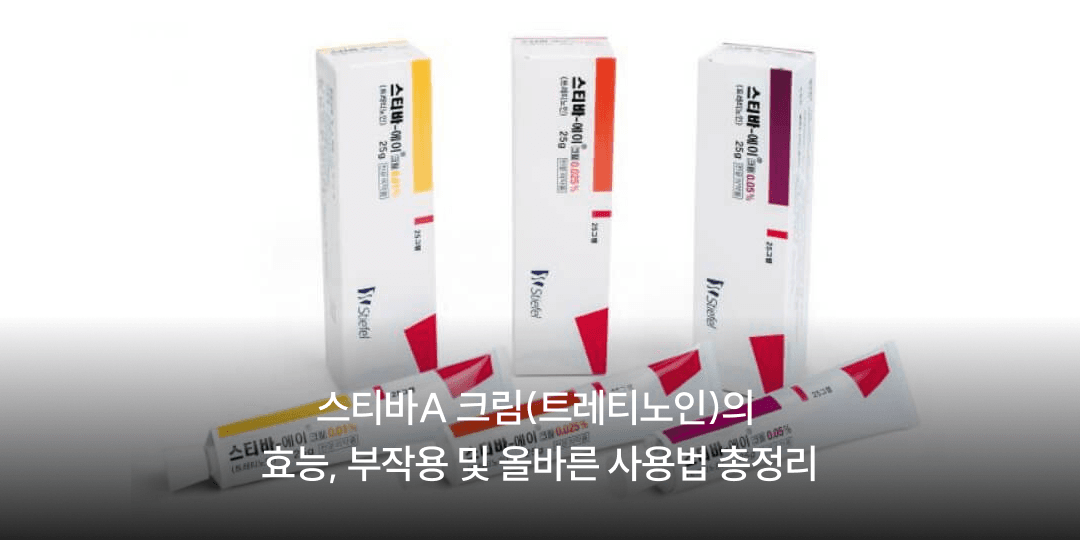
It comes in three strengths; the higher the figure, the stronger both the effect and the irritation.
0.01% / 0.025% / 0.05%
Tretinoin accelerates the skin's renewal cycle. It sheds old dead skin at the surface and encourages new skin to come through quickly from beneath.
It was originally developed as a first-generation acne treatment, but in the process it was shown to support collagen regeneration, softening fine wrinkles and improving skin texture.
The representative adverse effects are as follows.
Very common (over 10%): itching, stinging, dryness, flaking
Rare: hyperpigmentation, photosensitivity reaction, skin atrophy (thinning)
A clinical note: statistically side effects are described as rare, but around 40% of the patients who come to us — two in five — have sensitive skin.
It is very common for those with redness or very dry skin to apply it on the strength of a trend and come in with skin that has flared up, or with darkened pigmentation instead.
Many patients apply it at night and then rinse only with water in the morning, hoping to reduce irritation, before going out.
This is one of the main causes of side effects.
Why: tretinoin is highly photosensitive.
The result: residue left on the skin overnight reacts with morning sunlight, causing sudden redness, itching and hyperpigmentation.
The answer: in the morning, always use a foaming cleanser to wash off the previous night's application completely.
Contrary to its popular enthusiasm, research on tretinoin in the global medical literature has been declining since the 2010s.
Second-, third- and fourth-generation acne treatments with less irritation have been developed, and laser treatment and safer exfoliating cosmetics such as AHA and BHA have appeared in large numbers.
The manufacturer accordingly discontinued the cream worldwide, citing reduced demand.
Domestic pharmacies are short of stock, and equivalent domestic alternatives are also in short supply.
Tretinoin (or an equivalent alternative) suits oily skin of reasonable thickness best.
If you are considering it, please keep to these four rules.
Check your skin type: if you have sensitive skin or a sun allergy, avoid it altogether.
Limit the amount and area: use only in the evening, and only a very small amount — about the size of a little fingernail per area. (Avoid thin, dry areas such as around the eyes and the neck.)
Cleanse thoroughly in the morning: wash off all residue with a foaming cleanser on waking.
Sun protection: reapply sunscreen frequently, both outdoors and indoors.
A tip for sensitive skin: if you have sensitive skin but want to try it, test a very small amount for about a month on an oilier, thicker area such as the nose or the cheek before widening the area. A medicine that does not suit your skin can do harm, so please consult a dermatologist and have your skin barrier assessed first.
Thank you for reading to the end.
Our medical team will advise you based on your skin condition.